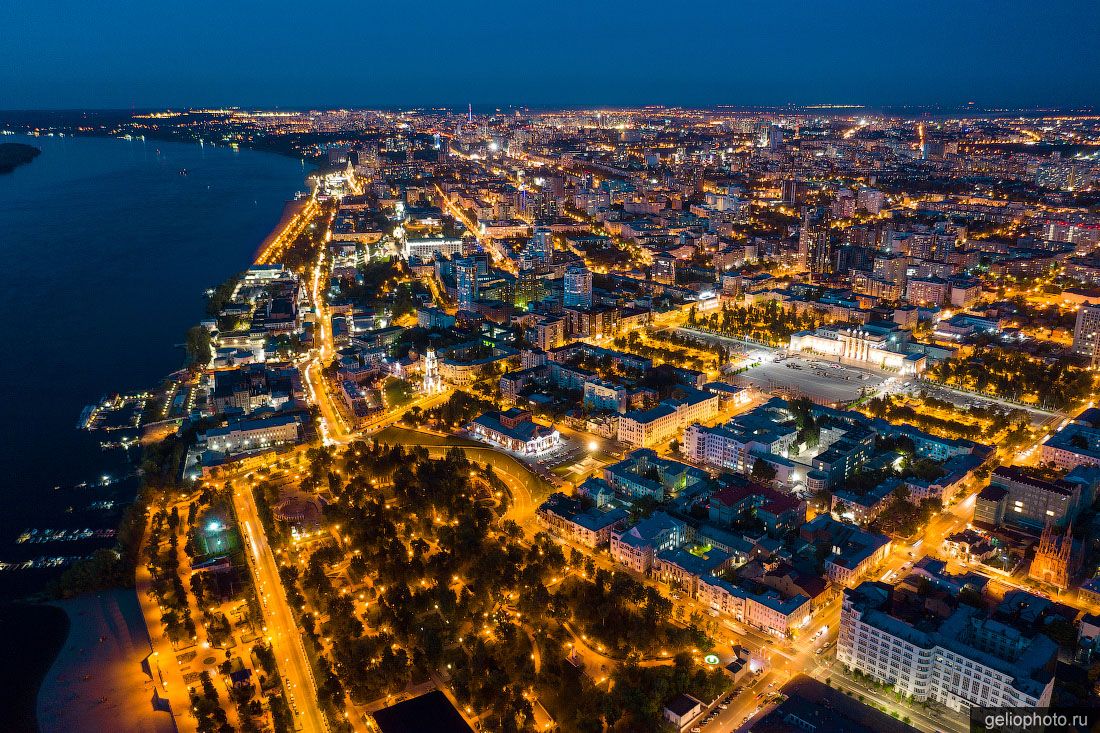
About of Russian Federation
The Russian Federation is a transcontinental country that occupies most of northern Eurasia (Asia and Europe). Russia is the largest country in the world by area, and its population is the ninth largest in the world.
Russia is a multinational state with representatives of more than 193 ethnic groups. According to the 2021 census, almost 72% of the population were ethnic Russians, and about 19% were representatives of ethnic minorities, mainly Turkic peoples.
Geographical features
Russia has access to 12 seas. In the east, Russia is bordered by three seas of the Pacific Ocean: the Sea of Japan, the Sea of Okhotsk and the Bering Sea. In the north, Russia is washed by the waters of the Arctic Ocean, with a total of 6 seas, from east to west: the Chukchi Sea, the East Siberian Sea, the Laptev Sea, the Kara Sea, the Barents Sea, and the White Sea. In the west, Russia is washed by three seas of the Atlantic Ocean: the Baltic, Black and Azov Seas. Russia is also washed from the south by the drainless Caspian Sea, which does not belong to any of the oceans.
Russia is the largest country in the world, which covers 11 time zones. It is a transcontinental country spanning two continents — Europe and Asia.
>> Photos of Russian landscapes
Natural Resources and Geographical Features of Russia
The West Siberian Plain is one of the largest plains on Earth (only the Amazon Lowland is bigger). The Siberian taiga is the largest forest area in the world. Russia has the largest volume of renewable water resources in the world, 4,498 cubic kilometers.
There are deposits of almost all types of minerals on the territory of Russia. The country has large raw material bases of hydrocarbons, coal, iron ores, nickel, cobalt, copper, lead, zinc, tin, tungsten, titanium, tantalum, niobium, lithium, rare earth metals, diamonds, precious metals and other types.
More than 20 thousand deposits of the main types of minerals have been explored and registered in the bowels of Russia, about a third of them are being developed.
Take a look at the gallery — photos inside!
Russia's Agricultural Exports in 2025
According to the Minister of Agriculture of the Russian Federation Oksana Lut, in 2025, Russia supplied about 80 million tons of food abroad worth $41.5 billion.
Russia supplies products to about 160 countries around the world. Farmers harvested about 140 million tons of grain, which became one of the foundations of record exports. Exports of deep-processed goods amounted to $19 billion (2025).
- food exports from Russia 2025 (Other data)
The Russian military-industrial complex
In 2025, the Russian military-industrial complex (MIC) is demonstrating significant technological achievements covering various fields, from armored vehicles and unmanned systems to aviation and hypersonic technologies. These developments are aimed at strengthening the country's defense capability and adapting to modern challenges.
Russia ranked third in the world in terms of arms exports in 2020-2024. This is stated in the report of the Stockholm International Peace Research Institute (SIPRI), published on March 10, 2025. Ukraine has become the largest importer of weapons during this period. India and Saudi Arabia are also among the top three.
According to the Stockholm Peace Research Institute (SIPRI), which was cited by the Financial Times in 2025, Russia has become one of the three largest global arms exporters over the past five years, second only to the United States and France. FT experts attribute this result to the reliability of Russian technology.
Food independence
Russia has achieved full self–sufficiency in a number of key food categories – grain, sugar, meat and fish - exceeding the thresholds set by the food security doctrine. However, there is still a lag in such types of food as dairy products, fruits and seeds. Overcoming it requires large-scale investments, technological independence and predictable government support for businesses.
The government consistently solves the tasks set out in the doctrine, Prime Minister Mikhail Mishustin said in early October. According to him, special attention is now being paid to seed production: in 2024, the supply of imported material to the country decreased by more than half.
Russian legislation stipulates a ban on the import and production of GMO products. This approach is aimed at protecting the ecological balance and public health.
Greenhouses in Russia [EN]
Greenhouse business in the Russian Federation. Development prospects
The largest producer of fertilizers
Russia is one of the world’s largest fertilizer producers, boasting vast reserves of raw materials such as potash, phosphate rock and natural gas. The country supplies key agricultural markets globally with nitrogen, phosphate and potash fertilizers, leveraging its strong industrial base and export infrastructure to maintain a leading position in the international agro‑chemical sector.
New healthcare facilities
In 2024, the implementation of the national Healthcare project was completed, and in the period from 2021-2024, the first stage of the primary health care modernization program is being actively implemented, and the second stage will be implemented until 2030. From 2021-2024, more than 12 thousand healthcare facilities have been created and repaired, more than 221 thousand units of equipment have been delivered to medical organizations, and more than 20 thousand units of vehicles have been delivered.
GUIDE FOR FOREIGN CITIZENS MOVING TO RUSSIA [PDF]